This content is also available in: German
EV market development
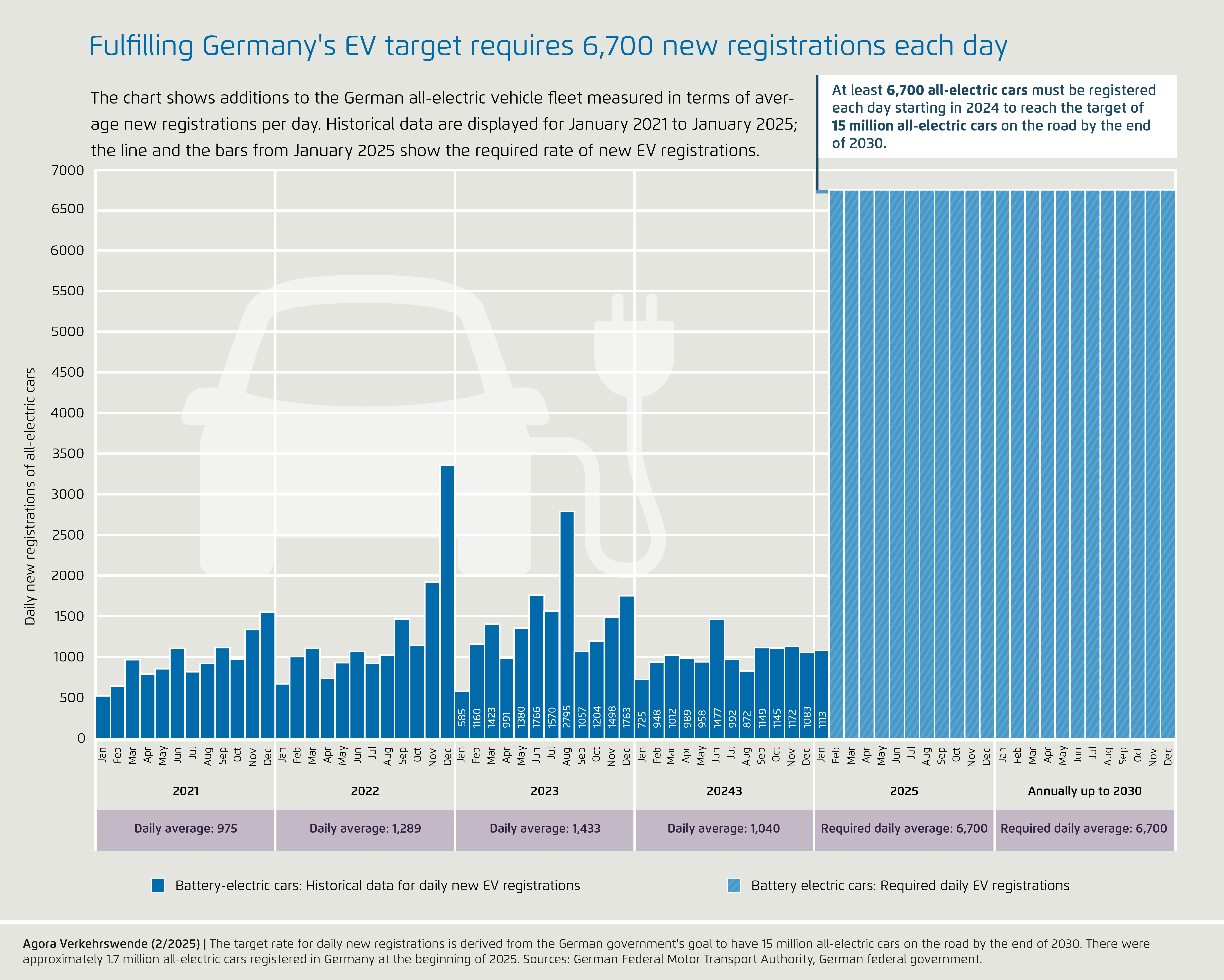
Infographics on new registrations of all-electric cars in Germany


About this Graphic
August 2026:
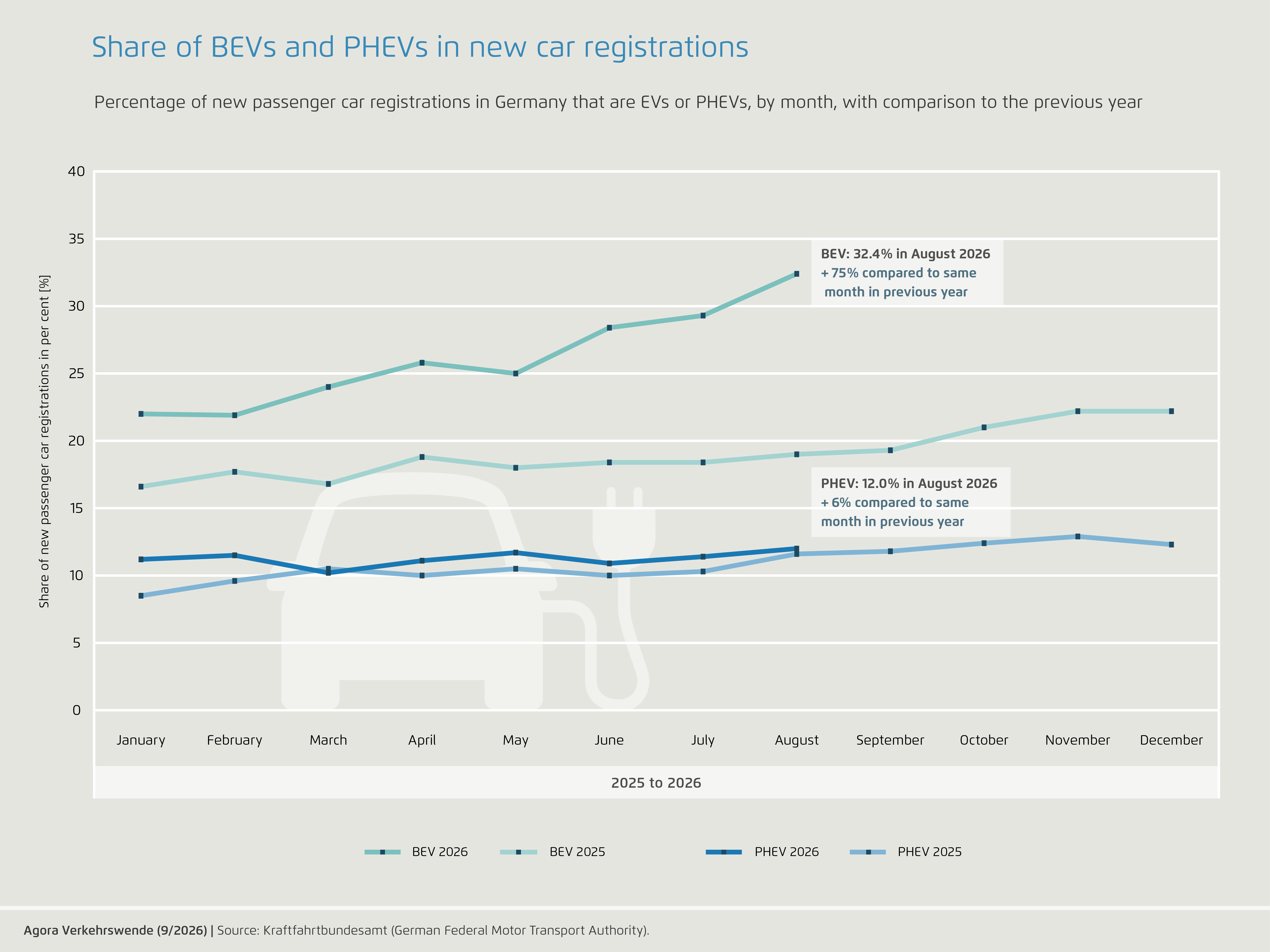
The shift towards fully electric cars in Germany continues to gain momentum. In August, battery electric cars accounted for 32.4 per cent of new car registrations, the highest share in 2026 thus far. The absolute number of vehicles registered was 75 per cent higher than in the same month last year.
High fuel prices and the electric car purchase subsidy for private buyers are helping to drive this trend, alongside a growing choice of models and charging options. When including plug-in hybrids, which accounted for 12 percent of registrations, almost half of newly registered cars in Germany (i.e. 44.4 per cent) now has a plug.
Accelerating the uptake of electric vehicles will advance several policy goals:
- strengthening Germany’s automotive industry as it competes for the markets of the future;
- reducing reliance on petroleum imports; and
- protecting the environment and earth’s natural systems.
To set a clear course towards electric mobility, however, the German government still needs to take several steps:
- Maintain a firm commitment to fleet-wide CO₂ emission limits.
- Support industry in managing the transition.
- Strengthen competition in the public charging market and enable bidirectional charging.
- Improve access to charging infrastructure by removing bureaucratic barriers to the expansion of private charging facilities and providing targeted support for charging points in multi-unit residential buildings.
- Reform company car taxation rules by increasing the flat rate used to calculate the taxable benefit for combustion-engine vehicles from 1 to 1.5 per cent of the list price.
- Ensure priority use of alternative fuels in aviation and maritime transport.
- Provide for an orderly and predictable transition to the EU Emissions Trading System for the carbon pricing of transport fuels.
More Information
Read the (German) blog post “Electric car subsidy: An important step – more should follow” by Marion Vieweg-Mersmann of Agora Verkehrswende to find out how the planned purchase subsidy could be improved and what else is needed.
Read our detailed (English) recommendations in the analysis “Effectively promoting private electric mobility”.
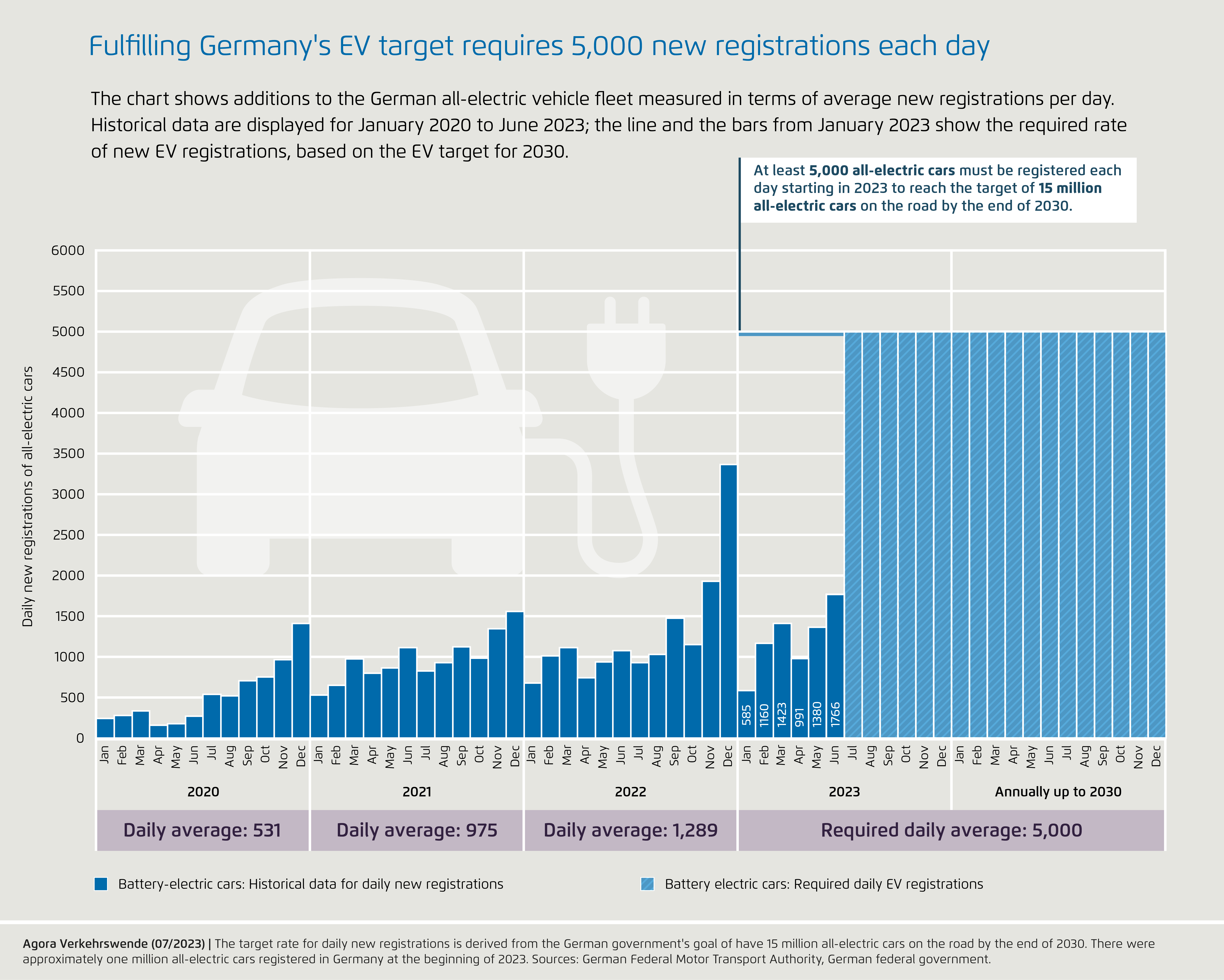
Notes on the older graphics:
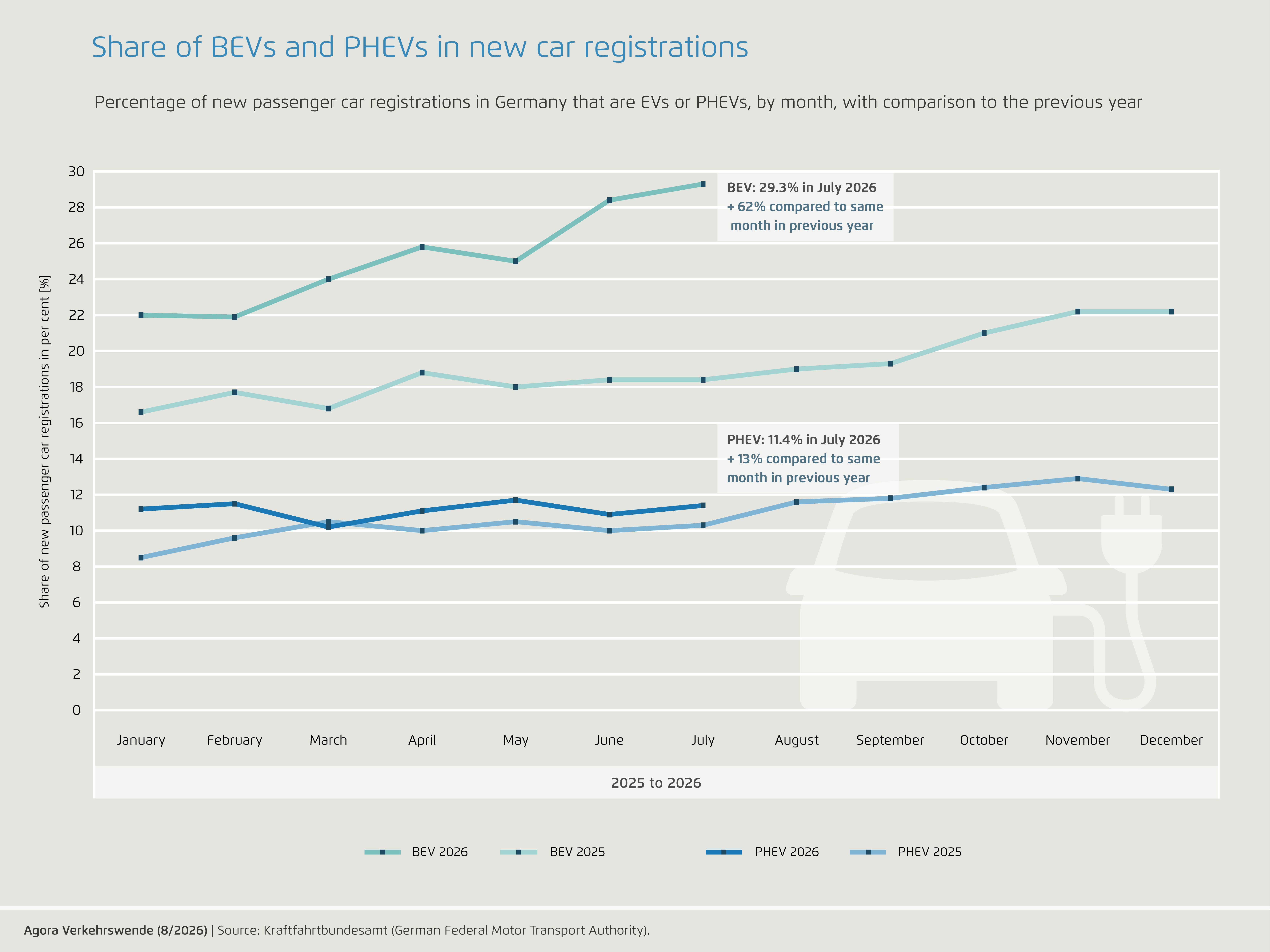
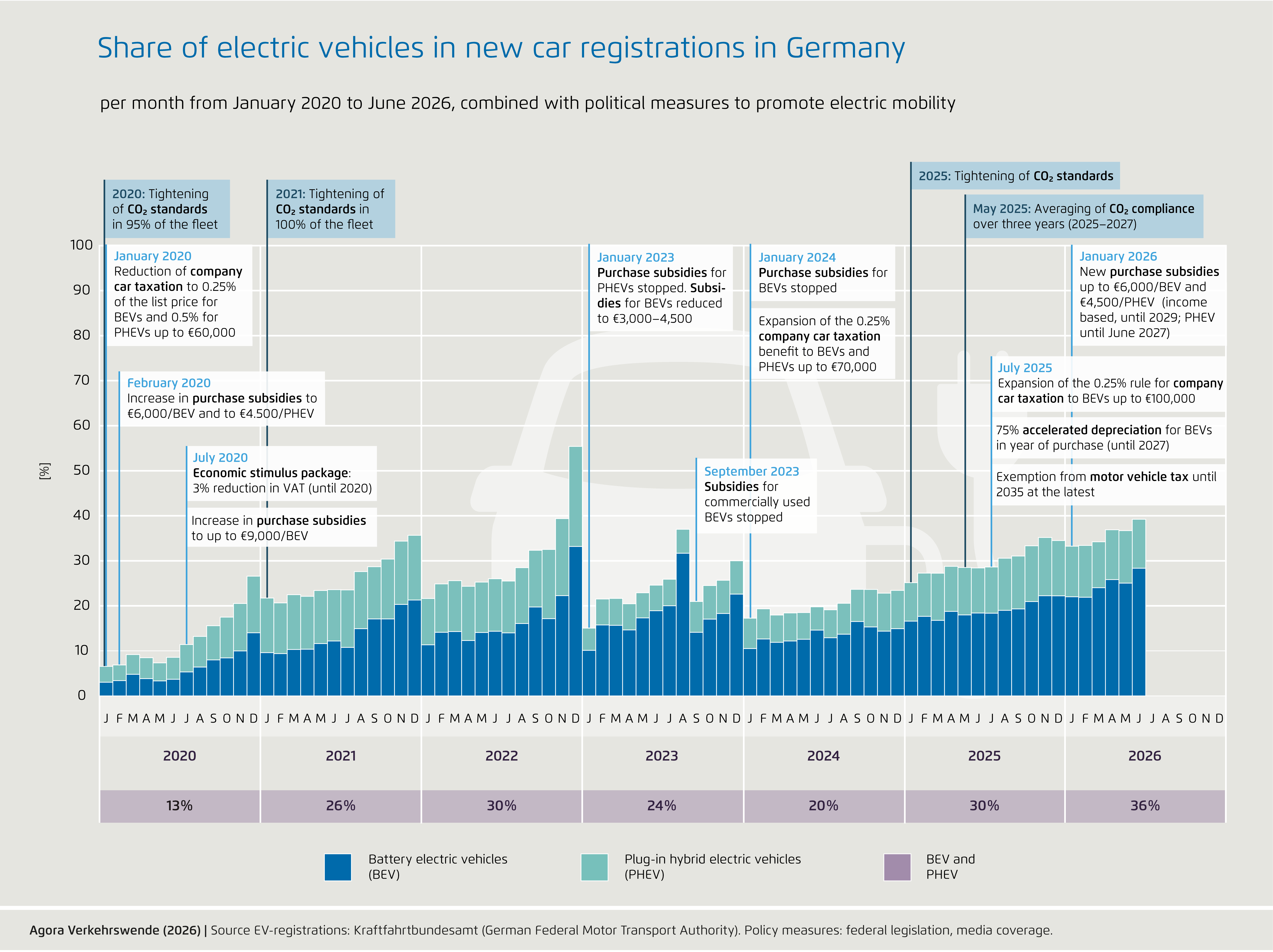
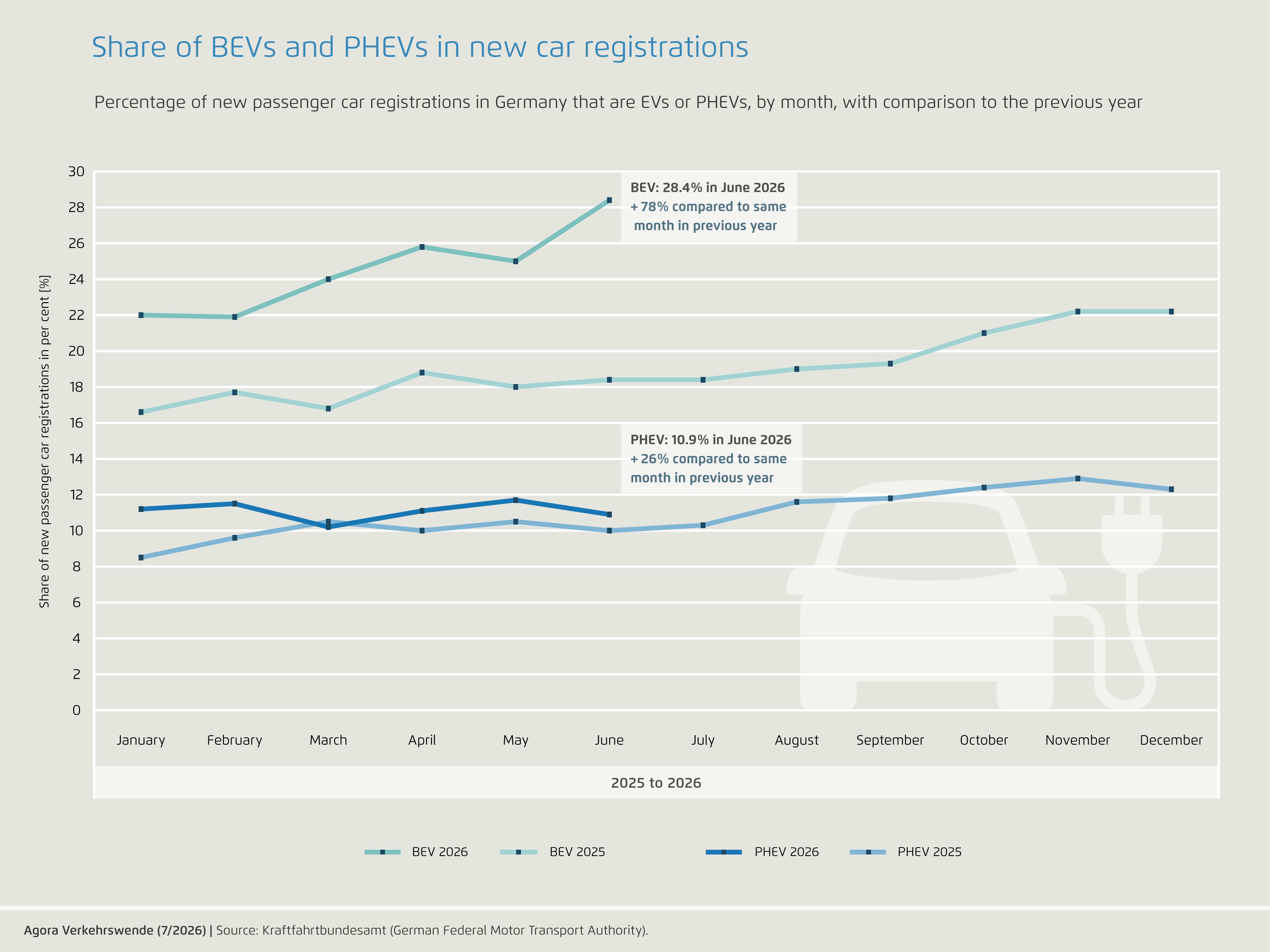
In addition to the current sales figures for the past month, you find a few more graphics from recent months and years above.