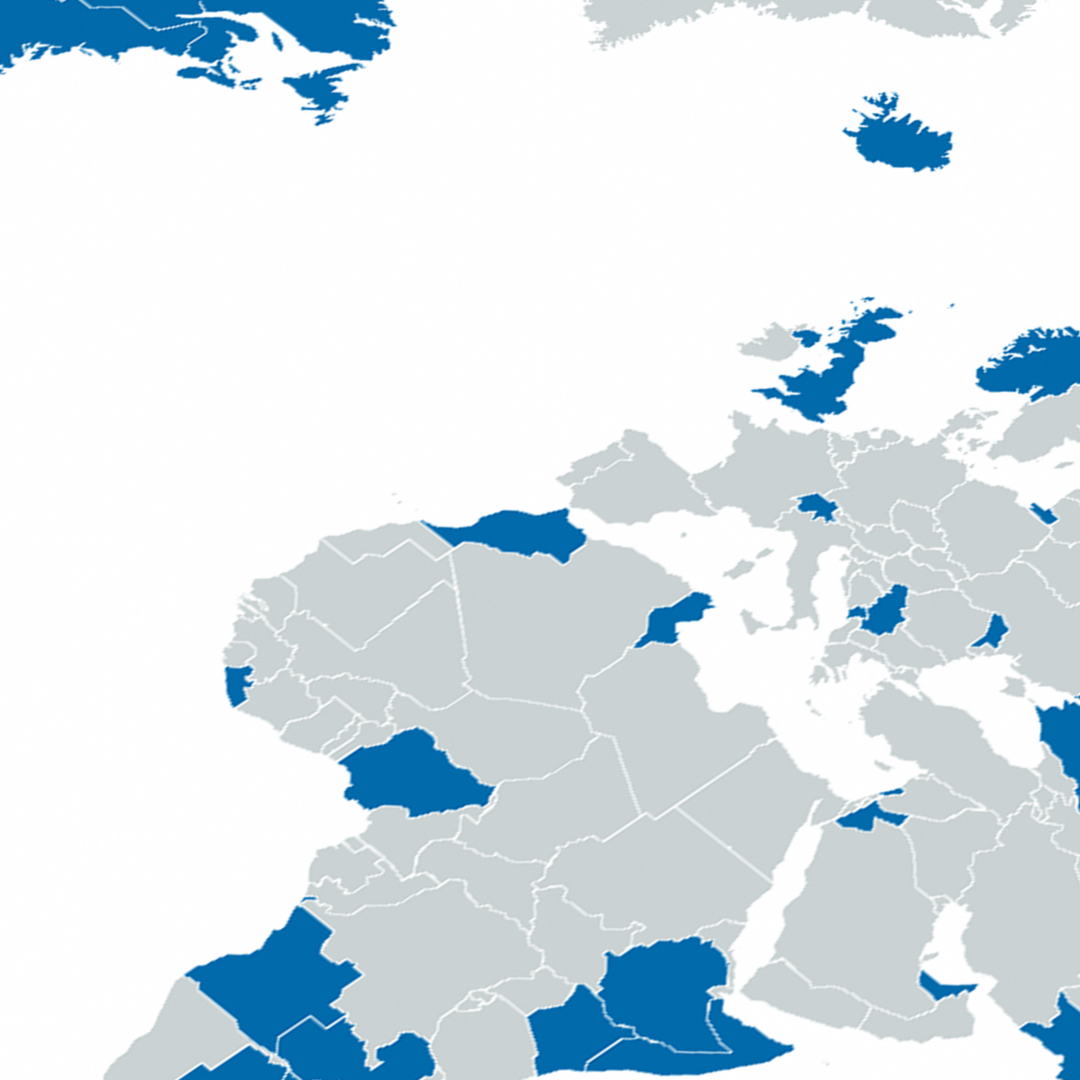
More than 120 countries aim to expand electric mobility
Agora Verkehrswende’s interactive world map shows countries’ ambitions for expanding electric mobility under the Paris Agreement / 77 countries have specific expansion targets / The efforts of middle-income countries need international support
4 November 2026. A total of 123 countries have committed to expanding electric mobility in their third Nationally Determined Contributions (NDCs) (as of September 2026). Of this number, 77 countries, including the 27 EU member states, have formulated specific expansion targets for electric vehicles (EVs). They account for 65 percent of global car sales and for 37 percent of global transport sector greenhouse gas emissions. These are some of the takeaways provided by the interactive EV NDC World Map, published by the German think tank Agora Verkehrswende. In a previous version of the map, with data current to December 2025, a total of 104 countries had committed to expanding electric mobility, and 66 had formulated specific expansion targets.
“It is encouraging to see the growing policy action being taken worldwide to replace the combustion engine with electric alternatives,” says Christian Hochfeld, Director of Agora Verkehrswende. “However, stepped-up ambition is necessary: Concrete electric vehicle targets, as well as comprehensive measures for the market ramp-up of electric vehicles, should be included in every NDC, especially from major emitters.”
Among the top ten global emitters from the transport sector, Canada, China and the European Union have incorporated a clear electric vehicle target in their latest submissions. Major emitters such as the United States, India, Russia and Brazil have thus far omitted such targets.
The NDCs are an essential part of the commitments that signatory states must fulfil under the Paris Agreement. In their NDCs, countries outline their efforts to reduce CO2 emissions on a recurring five-year basis.
International support for emerging countries necessary
High-income nations represent about 46 percent of all countries with electric vehicle targets. The majority of the remaining commitments (49 percent) come from middle-income countries.
According to Linda Cáceres Leal, Project Manager for International Cooperation at Agora Verkehrswende, the strong participation of middle-income countries underscores the importance of the NDC process for signalling climate priorities and accessing international support: “Scaled-up financial support for developing and emerging countries would help bridge the capacity gap, ensuring that growing ambition translates into on-the-ground decarbonisation.”
About the publication
The EV NDC World Map, including explanatory information, is available online. The map is based on the NDCs submitted up to 30 September 2026, drawing on data contained in the NDC Transport Tracker maintained by GIZ and SLOCAT. The map also includes a section on electric vehicle targets at the national level.
About Agora Verkehrswende
Agora Verkehrswende is a Berlin-based think tank that seeks to promote climate-friendly mobility. Non-partisan and non-profit, it works together with key stakeholders in the fields of politics, business, academia, and civil society to decarbonise the transport system. To this end, the think-tank team develops evidence-based policy strategies and recommendations. Agora Verkehrswende was initiated in 2016 by Stiftung Mercator and the European Climate Foundation