- Publisher
- Agora Verkehrswende
- Authors
- Dr. Carl-Friedrich Elmer
- Version number
- 1.0
- Publication date
-
2 June 2026
- Pages
- 28
EU vehicle labelling reform
Aligning CO2 and energy information with consumer needs in digital markets and amid the transition to electrified vehicles
Executive Summary
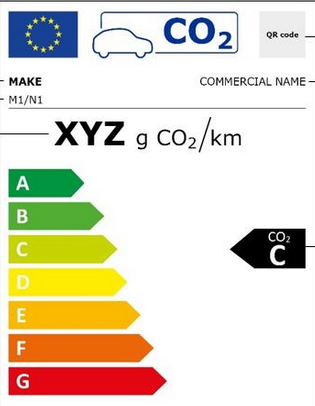
The EU aims to reform the labelling of passenger cars and light commercial vehicles with regard to their energy consumption and CO₂ emissions. To this end, the European Commission presented a proposal in December 2025 as part of its broader automotive policy package. The proposal would replace the still applicable 1999 Directive with a directly applicable Regulation.
The reform elements would fundamentally modernise an outdated legal framework that no longer adequately reflects the reality of a digitalised and technologically diverse vehicle market. However, harmonisation and adaptation to technological developments alone do not ensure behaviourally effective consumer information.
What is already moving in the right direction
The proposal improves the information framework at several key points. By moving from a directive to a regulation and introducing a uniform EU-wide label, the currently divergent labelling practices across Member States will be harmonised, thereby reducing fragmentation within the internal market. Labelling obligations will be substantially extended for digital sales channels and online advertising, and a public online product database linked via QR codes will be introduced. This reflects the shift from showroom-based to increasingly digitally mediated purchase decisions.
The Commission proposal also takes into account the ongoing electrification of the vehicle fleet by systematically incorporating electric range and electricity consumption into the information requirements. Used vehicles are also included in the labelling requirements. For electric vehicles, this includes – where available – information on battery state of health (SoH), which increases transparency for consumers who are unable to afford new vehicles.
Where the proposal could be strengthened further
While the proposal updates both the label and the associated information infrastructure, it does not yet consistently ensure that consumers receive decision-relevant information at the right moment and in a format that is easily understandable and capable of supporting well-founded choices. Beyond the positive aspects mentioned above, Agora Verkehrswende sees six key areas for further improvement:
First, make digital vehicle searches easier by requiring filtering and sorting options for energy efficiency and CO₂ emissions.
Background: In today’s vehicle market, purchase decisions are shaped less by labels in showrooms than by digital search filters, configurators, platform interfaces and ranking logics. While the proposal extends labelling obligations to digital environments, it does not require larger commercial platforms to provide filtering and sorting functions based on energy consumption, efficiency class or CO₂ emissions as standard features. This is problematic, as the relevant set of vehicles is often narrowed down before consumers reach the detailed product page where the label is displayed.
Recommendation: The Regulation should require larger online platforms – including manufacturer websites and intermediary marketplaces – to offer filtering and sorting functions based on CO₂ and energy-efficiency parameters, using harmonised EU data. In this context, the proposal’s existing requirement to indicate efficiency changes resulting from configuration choices should be further specified to ensure that deteriorations in efficiency beyond defined thresholds are clearly and prominently highlighted.
Second, increase financial transparency by adding a digital cost module to the EU database.
Background: Monetised information often has a stronger behavioural impact than technical efficiency metrics alone, as shown by empirical evidence. While energy consumption and CO₂ emissions are relevant, financial implications tend to be more action-guiding, particularly when presented in a simple format, aggregated over longer time horizons, or compared against benchmarks.
Recommendation: The information framework should be complemented by a digital cost module integrated into the public database. While the structure of such a module should ideally be harmonised at the EU level, the underlying assumptions – for example on energy prices, taxation or subsidies – should be adapted to national circumstances. If a fully harmonised and mandatory EU-wide solution proves politically infeasible, Member States should at least be explicitly allowed to provide separate national cost information modules linked to the harmonised technical dataset.
Third, help consumers identify efficient electric vehicles by introducing new energy-efficiency indicators.
Background: Under the current proposal, the classification logic remains anchored in tailpipe CO₂ emissions, meaning that all battery electric vehicles (BEVs) fall into the highest efficiency class – regardless of their electricity consumption, which can vary significantly across models. The label provides only a numerical consumption value, without offering an intuitive visual differentiation within the growing BEV segment. As a result, consumers lack a clear and immediately recognisable signal to distinguish between more and less efficient electric vehicles.
Recommendation: In the short term, the EU database should therefore provide supplementary, easy-to-interpret efficiency indicators, such as colour-coded efficiency bands or percentile rankings based on electricity consumption. At the same time, the legislation should prepare the ground for a medium-term transition towards a cross-technology classification based on final energy consumption per vehicle kilometre. In this context, it should also be assessed whether the current A to G scale provides sufficient resolution to reflect the wide range of energy efficiency levels across propulsion technologies within a unified classification system.
Fourth, improve comparability across model years by flagging changes in test procedures and adding supplementary comparison values.
Background: Changes in test procedures and methodologies can make official consumption and emission values difficult to compare across vehicle cohorts. This is particularly relevant for plug-in hybrid electric vehicles (PHEVs), whose CO₂ values depend heavily on the utility factor (UF), i.e. the assumed share of electric driving. Adjustments to the UF methodology have already been implemented. Further changes are planned as the methodology is aligned with observed driving and charging behaviour. Older used vehicles certified under the NEDC procedure, obsolete since 2018, may also be affected, provided that consumption and emission values of these vehicles will be displayed at all. Yet, their treatment under the new framework calls for further clarification. Without appropriate contextualisation or adjustments to the values presented in the information materials, there is a risk that consumers interpret purely methodological differences in type-approval consumption and CO₂ values as real performance differences.
Recommendation: To improve comparability, the EU database should therefore provide complementary values that address these distortions. For PHEVs, this could involve recalculating CO₂ and consumption values based on current UF assumptions; for older NEDC vehicles – to the extent that they are actually labelled – indicative conversions to WLTP-equivalent values could be provided.
Fifth, strengthen the value of vehicle labelling by providing more realistic energy consumption information.
Background: Even under the current WLTP procedure, official test-cycle values often diverge significantly from real-world consumption and CO₂ emissions, particularly for PHEVs. Incorporating more realistic performance information would help consumers make better purchase decisions; however, this is not provided for in the current Commission proposal.
Recommendation: A pragmatic short-term solution would be to include indicative real-world CO₂ and consumption values in the EU database, accompanied by clear disclaimers distinguishing them from official test values. A tiered approach could strike a balance between informational value on the one hand and data availability, practicality and legal robustness on the other. Where sufficient data are available – from on-board fuel consumption monitoring – model-specific real-world values could be provided, which is likely to be particularly relevant for used vehicles. Where such data are not yet available, adjustment factors at the manufacturer or fleet level could be applied. In the longer term, the Regulation could lay the groundwork for the development of a robust methodology for more realistic, consumer-oriented performance indicators, similar to those used in the United States.
Sixth, better reflect the everyday usability of electric vehicles for different usage needs by including clear charging information.
Background: Electric range alone does not adequately capture the everyday usability of electric vehicles for different user needs. Charging performance is a key determinant of practical usability, especially for regular longer trips or where no home charging option is available.
Recommendation: The label should therefore include a simple and intuitive indicator of fast-charging capability, such as the time required to charge from 10% to 80% under standardised conditions, complemented by an indication of the corresponding range gained. The database could provide additional relevant information, such as maximum AC charging power, charging times in standardised real-world situations, range under adverse conditions, usable battery capacity and warranty provisions.
Next steps
The options for improving the European framework for vehicle consumer information can be implemented through different legal instruments and on different timelines. As a general principle, key structural decisions – such as the core elements of the label, the central classification logic, and binding requirements for digital search functionalities – should be anchored in the basic act. By contrast, many technical details can be specified at a later stage through delegated or implementing acts, provided that the relevant empowerment provisions are sufficiently broad. A staged approach therefore appears advisable: establish key elements and legal bases now, refine technical details subsequently, and embed a clear review and implementation perspective for more far-reaching reforms.
Overall, the Commission proposal would establishe a modern and harmonised information infrastructure. To fully realise its potential, however, the reform of the EU vehicle labelling framework should go beyond harmonisation and the updating of existing disclosure requirements. It needs to adopt a behaviourally informed approach that reflects how vehicle choices are actually made in a digital and increasingly electrified market. The key question in the ongoing legislative process is therefore not only which additional information should be provided, but whether it is presented in a form, at a time, and in a context in which it can effectively support consumer decision-making. This is particularly important against the backdrop of Europe’s continued dependence on fossil energy imports, volatile oil prices, and ongoing debates about a potential weakening of CO₂ fleet standards. In a context of growing uncertainty, it is essential that consumers have easy access to clear, relevant and reliable information on the environmental and financial implications of their vehicle choices.
Bibliographical data
Downloads
-
Analysis
pdf 291 KB
EU vehicle labelling reform
Aligning CO2 and energy information with consumer needs in digital markets and amid the transition to electrified vehicles