This content is also available in: German
G20 countries: Slower growth in transport CO₂ emissions thanks in part to electrification
A new study by Agora Verkehrswende and GIZ spotlights transport-sector trends in the largest industrialised and emerging nations / Massive increase in electric mobility since 2015 / Significant jump in private vehicle use / Further investment required in alternatives to the automobile

26 March 2026. Transport-sector emissions in the G20 have grown just four percent since 2015 – a notable slowdown from the rapid increases of past decades. This finding emerges from a study conducted by Agora Verkehrswende and GIZ on transport-sector trends in the largest industrialised and emerging nations. Despite this modest emissions increase, G20 nations have maintained robust economic growth, signalling a structural decoupling of economic output from carbon emissions. A primary driver of this trend is the accelerating electrification of transport, the study concludes.
The ‘Group of 20’ is a forum for the world’s major industrialised and emerging economies, including the European Union. Representing 61 percent of the world’s population, the G20 nations generate some 79 percent of world’s economic output and are responsible for two-thirds of its CO₂ emissions. Agora Verkehrswende will soon release transport and emissions data for the African Union, which joined the G20 in 2023.
Ninety-six percent of global growth in electric mobility since 2015 has taken place in G20 countries. The number of electric vehicles worldwide has increased fiftyfold over the past decade, from 730,000 to 39 million. As the Agora Verkehrswende and GIZ study shows, almost all G20 countries have set targets for expanding electric mobility, and have introduced corresponding policy measures. In addition, growth in EV vehicle fleets has been accompanied by significant increases in low-carbon power generation.
Christian Hochfeld, Director of Agora Verkehrswende: “The world’s largest economies are clearly moving towards electric mobility. The Iran war demonstrates just how important the transition to electric vehicles is, as it reduces dependence on fossil fuels and associated security and cost risks. The market ramp-up of electric vehicles must now be considerably accelerated. Attempts to slow down this transition will have negative effects, not only the climate, but also the economy. Heightened uncertainty surrounding the government’s policy course undermines the stable conditions for planning and investment that underpins long-term corporate competitiveness.”
With the exception of Mexico, all G20 countries have adopted policies to promote electric vehicles, including reduced import duties, lower registration and ownership taxes, and direct rebates, the study shows. Some governments are also prioritising electric vehicles in the procurement of public-sector vehicle fleets. In addition, most G20 countries have been providing increasing support for domestic EV manufacturing.
In most G20 countries per-capita vehicle ownership continues to increase in line with broader economic growth; more than 80 percent of passenger journeys are made by car. Only in Japan and China does rail travel play a significantly more important role in passenger transport, thanks to extensive high-speed networks. Growth in more efficient modes of transport – including public transport by bus, rail, or water – has failed to match the rapid expansion of private mobility. The study thus underscores the need for additional policy measures to drive both electric vehicle uptake and a strategic shift toward more efficient transport modes.
About the publication
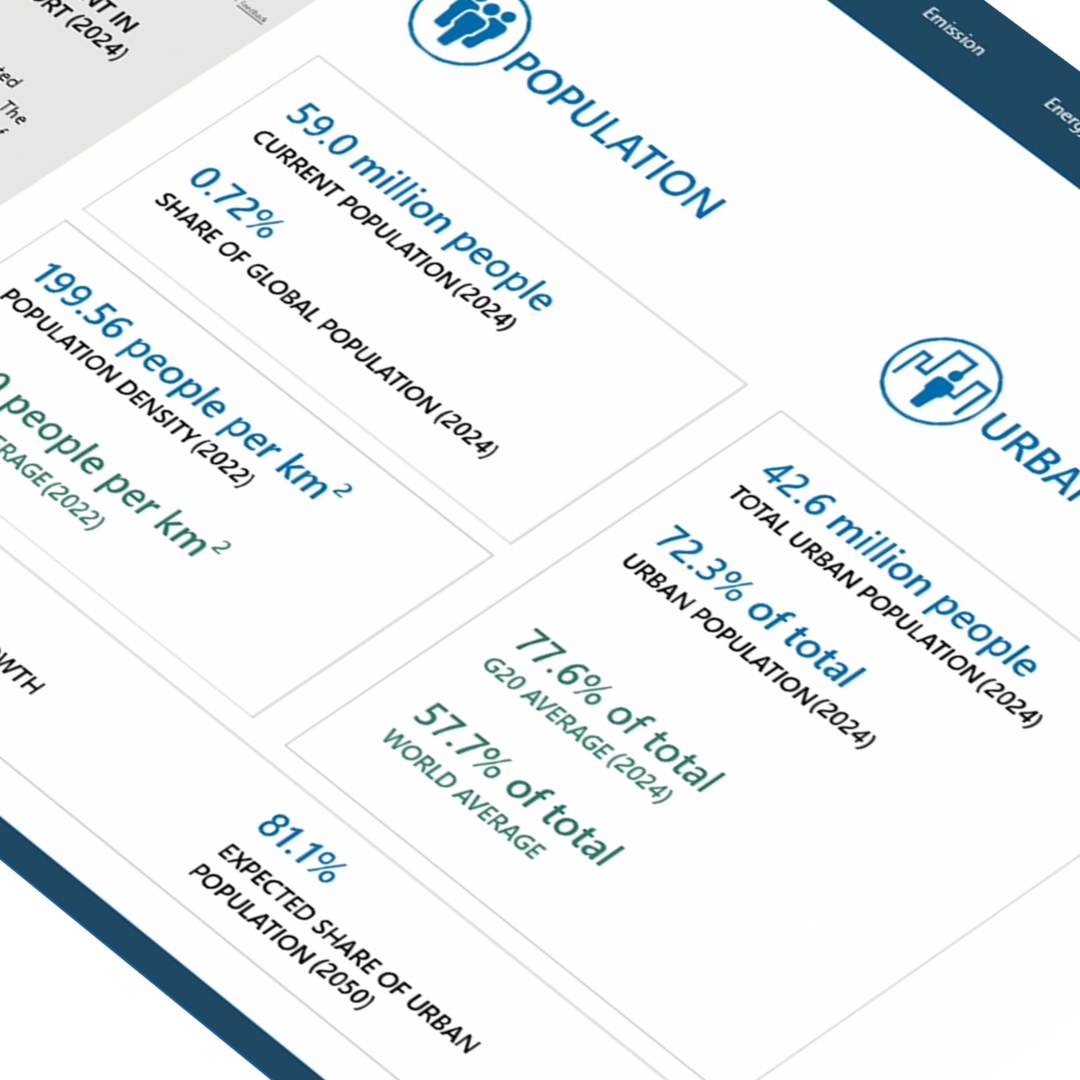
The study “Towards Decarbonising Transport 2026 – A Stocktake on Sectoral Ambition in the G20”is available for download free of charge here. The findings are also showcased within digital country profiles that feature interactive infographics. These country profiles provide a detailed overview of transport-sector trends in individual G20 countries, including decarbonisation targets and policy measures to promote climate-neutral mobility.