-
Electric mobility continues to advance in African countries, with East Africa emerging as the conti- nent’s pioneering region.
At least 21 African countries have adopted or are developing electric mobility policies. Among them, five East African countries – Ethiopia, Kenya, Rwanda, Tanzania, and Uganda – are the most advanced group on the continent. With a strong political commitment to electric mobility and motorisation rates averaging under 30 vehicles per 1,000 people, these countries will see strong growth in vehicle numbers in coming years and have the opportunity to leapfrog directly to electric mobility. Electric vehicle (EV) adoption has been low so far but is rising quickly with the launch of local assembly plants, particularly for two-wheelers and minibuses.
-
Industrial development goals, rising economic prosperity, and climate action are the main drivers of the trend towards electric mobility.
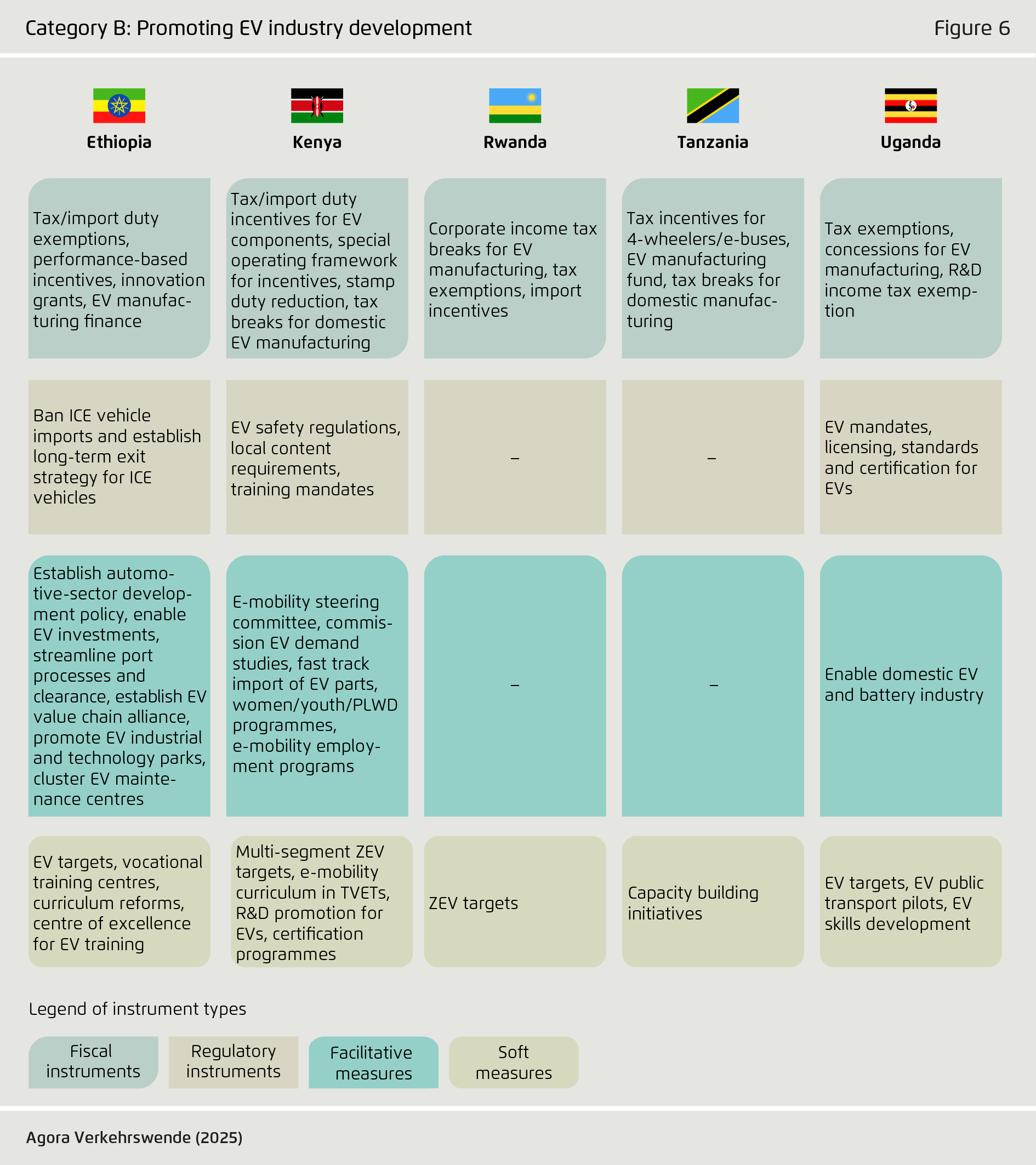
The five countries considered in this analysis view this global momentum as an opportunity for economic growth, the development of domestic value chains, and new jobs. Ethiopia emerged as an early mover, after it began to promote electric mobility at the national policy level in the early 2010s. The policies being pursued by these countries have evolved dramatically in terms of ambition and feasibility since 2020. Nevertheless, national approaches diverge significantly. Ethiopia has banned the import of internal combustion engine (ICE) vehicles; Uganda is emphasising local manufacturing supported by a state-owned EV automaker, Kiira motors; and Rwanda, with its relatively low motorisation rate, is prioritising the electrification of two-wheelers and buses.
-
Africa’s resource advantages need strategic integration into EV policies.
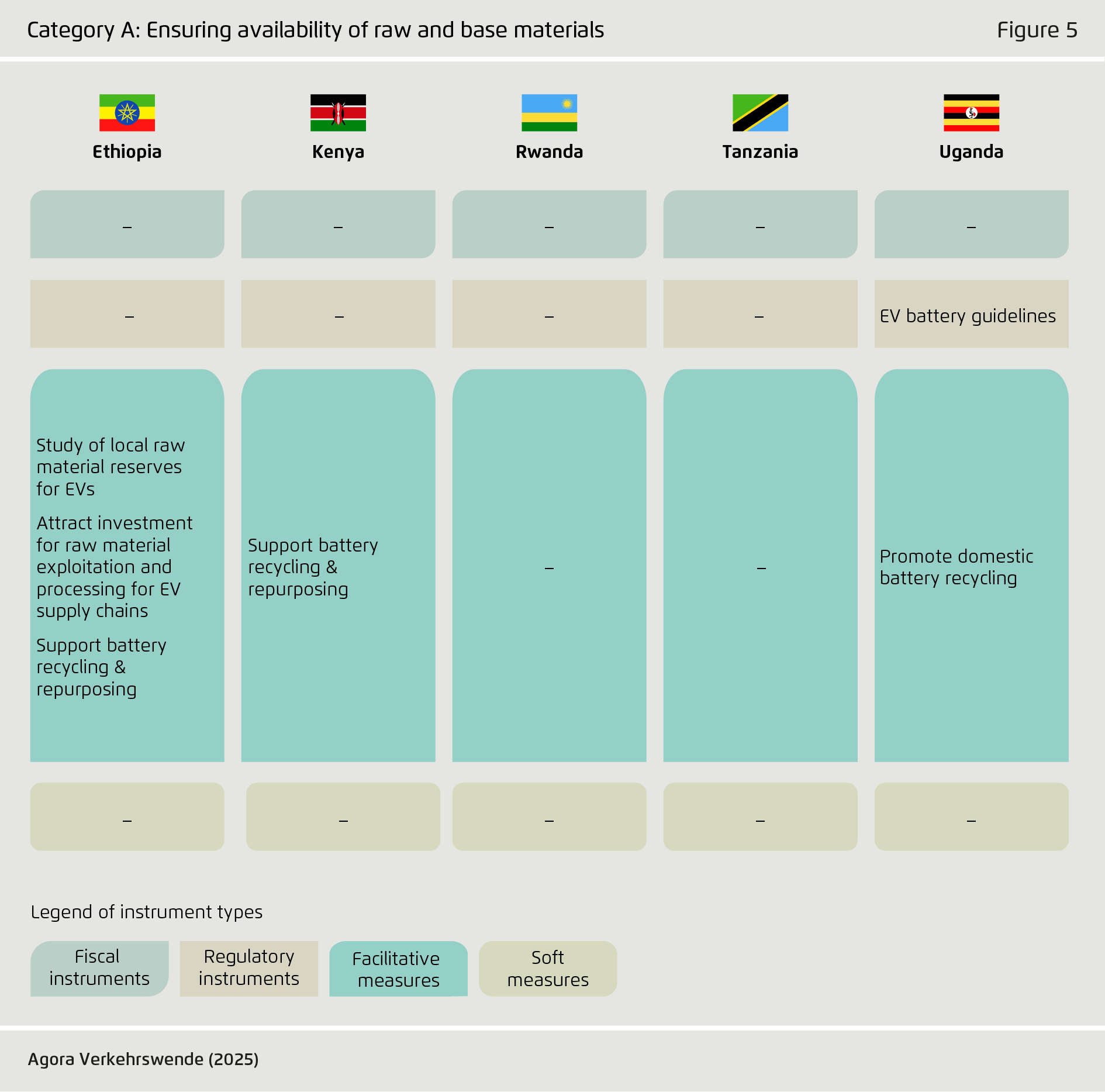
In the five East African sample countries, limited information is available on domestic reserves of raw materials critical for electric mobility. Only Ethiopia has prioritised measures to map and integrate raw materials into domestic EV production. Aligning with the AU’s African Green Minerals Strategy (AGMS) and strengthening the
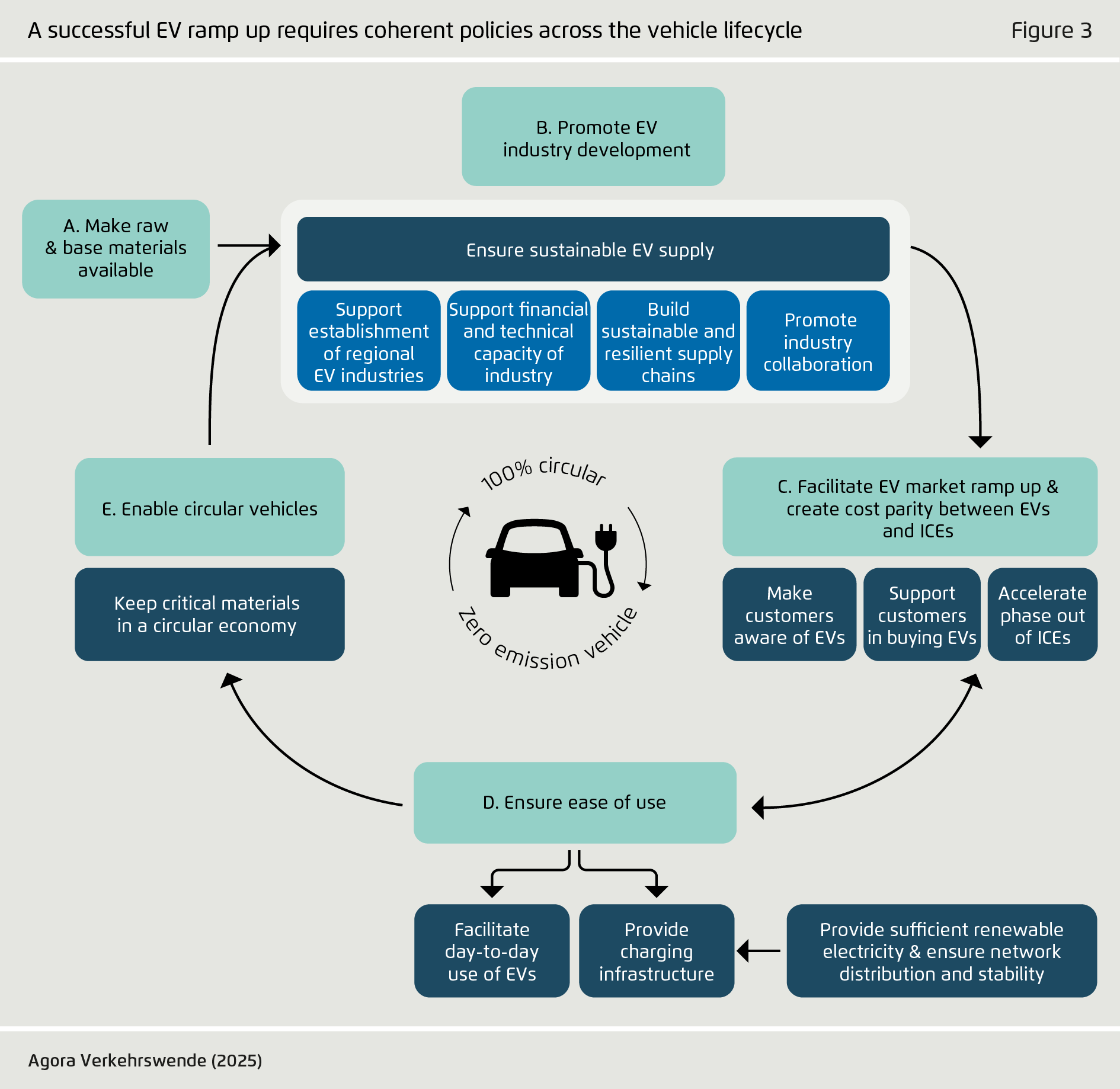
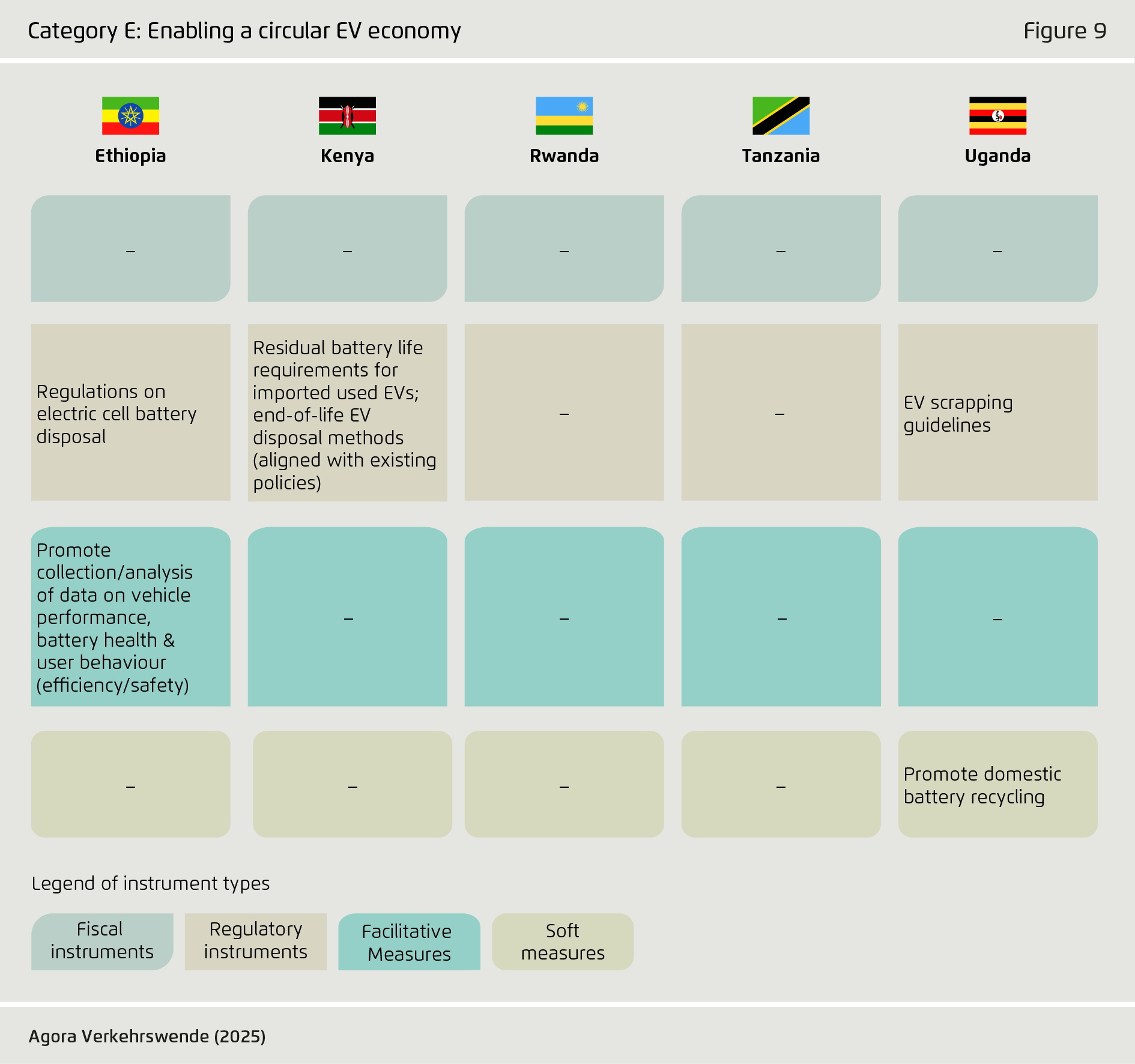
circular economy will be key for maximising long-term value creation while reducing dependency on new raw material inputs. To further close the raw materials loop, future EV policies should include comprehensive end-of-life planning for batteries and vehicles. A full EV lifecycle approach will ensure sustainability, efficiency, and environmental resilience -
Long-term policy certainty and regional coordination are crucial to accelerating and scaling initial achievements.
Governments in the region are setting ambitious EV goals, but their progress has been limited by incomplete national policy frameworks, gaps in institutional coordination, and uncertain fiscal incentives often tied to short-term budget cycles. Greater regional coordination will help to drive economies of scale and industrial specialisation while also bolstering investor confidence. Indeed, coordinated action across the domains of policy, standards, infrastructure, and market development will be essential to create a resilient and scalable EV ecosystem in the region.
-
International collaboration and joint investment projects can help to build resilient EV value chains.
Although many companies are already active in East African nations today in the area of semi and complete knock-down assembly operations for two and three-wheelers and to a lesser extent in the area of bus assembly, there is limited technological and financial capacity to scale. These operations have demonstrated proof of concept, but significant barriers, such as limited access to affordable financing, technology, and skilled labour, continue to hinder further growth. Cooperation and partnerships with EU member countries such as Germany could help to bridge the financing gap while enabling the transfer of the technology and skills required to build capacities for domestic EV manufacturing and market development.
Towards Electric Mobility in East Africa
Current Trends and Policy Approaches

Preface
Electric mobility has gained recognition amongst policymakers in Africa as a key path towards climate-neutral transport and industry across the continent. Indeed, electric mobility presents an opportunity for Africa to advance its industrialisation goals and climate ambitions, by building new industries, creating jobs, reducing greenhouse gas emissions, and improving urban air quality.
Today, the decarbonisation of transport in Africa is mostly focused on the transition to sustainable forms of mobility. Countries have been investing in the improvement of infrastructure, public transport services, and non-motorised transport, as 40–60 percent of Africans walk or use informal public transport. However, the economic benefits of electric mobility are quickly attracting additional investments. Expensive imported fuels together with cheap electricity from renewables have created favourable economic conditions for EV market growth. Local EV assembly plants are already operating in Ethiopia, Ghana, Kenya, Nigeria, and Tanzania. Currently, some 21 African countries are developing or have adopted so called EV Policies to develop the sector. Already one third of the countries on the continent is moving towards electric mobility.
As the phenomenon of the “global car” becomes a thing of the past amidst changes in geopolitics and automotive value chains, African nations have an opportunity to build their own EV industries and supply networks. The conditions are auspicious. For one, investment in the production of internal combustion engine vehicles and supply chains is already low in all African countries (with the exception of Morocco and South Africa). For another, EV drivetrain technology is comparably less complicated, while mineral and renewable resources are abundant. Finally, Africa’s young population is expanding, while the middle class continues to grow.
All in all, Africa has the chance to become a key player in the future global EV industry. Experience in other regions of the world has shown that the automotive industries are built in regional clusters with specialised value chains distributed across countries. At the moment, East Africa is the pioneer for electric mobility in Africa. Nearly 150,000 EVs, mostly motorcycles, are on the roads of Ethiopia, Kenya, Rwanda, Tanzania and Uganda. Ethiopia by far has the largest fleet, representing some 80% of electric vehicles in the region. Ethiopia, Rwanda, and Uganda have already adopted EV policies, while Kenya and Tanzania have draft policies under review. Moreover, four out of these five countries are members of the East Africa Community (EAC), an important organisation for reducing barriers to free trade in parts and components.
This paper provides an overview of EV market trends and policy developments in these five leading East African countries. While assessing the policies in each country, we consider outstanding challenges in the area of EV lifecycles. We also make suggestions for future policies that are robust to ongoing developments in the global EV market. Our assessment is meant to serve as a stimulus for further discussions with policymakers in the rest of Africa as they develop their own sector roadmaps. Governments across the continent would reap considerable benefits by developing future-oriented policy frameworks that promote EV adoption while also considering the entire EV lifecycle. We hope you find this publication both useful and informative – and valuable as a catalyst for further discussion.
Key findings
Bibliographical data
Downloads
-
Analysis
pdf 3 MB
Towards Electric Mobility in East Africa
Current Trends and Policy Approaches
All figures in this publication
An increasing number of African governments are developing EV policies
Figure 1 from Towards Electric Mobility in East Africa on page 7

Share:

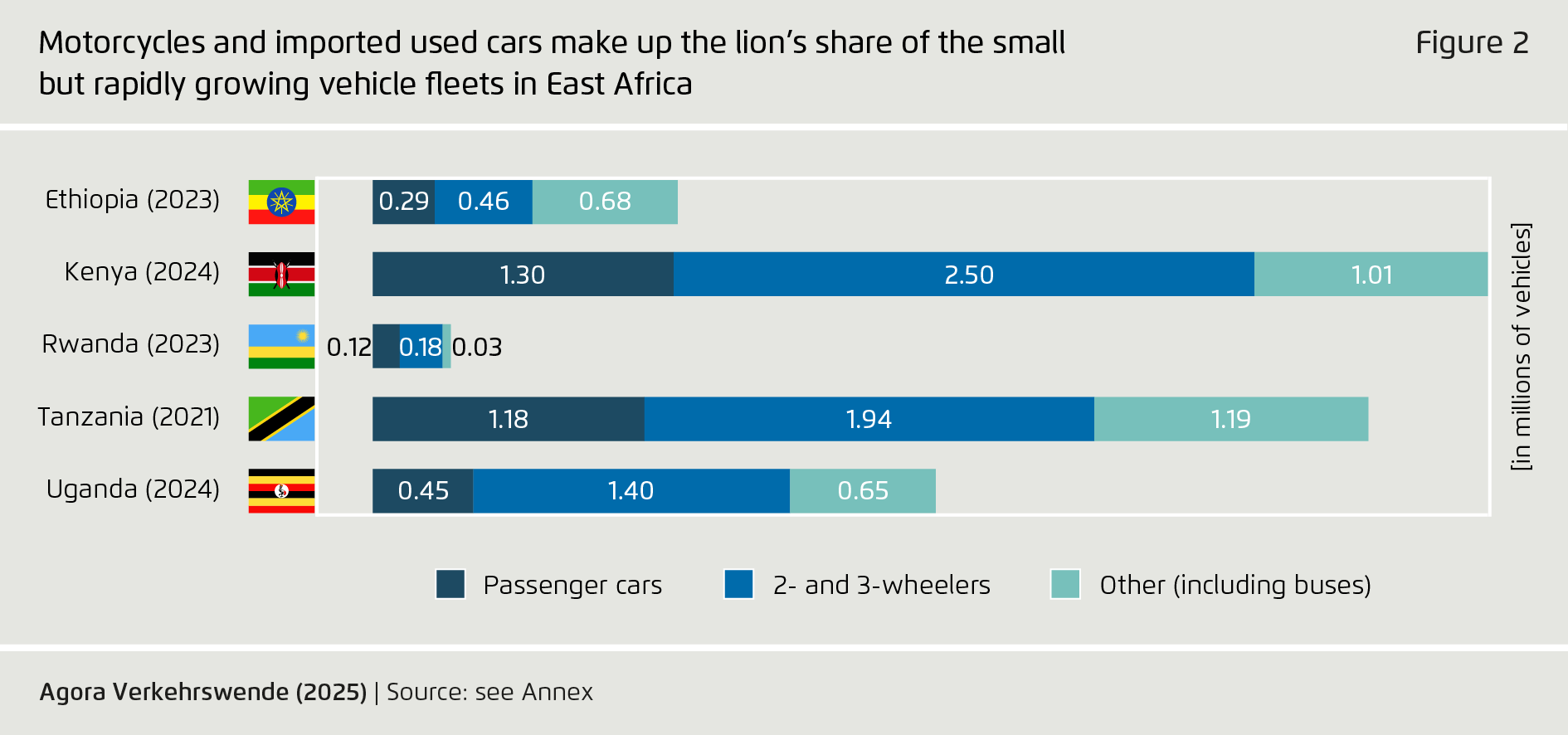
Motorcycles and imported used cars make up the lion’s share of the small but rapidly growing vehicle fleets in East Africa
Figure 2 from Towards Electric Mobility in East Africa on page 9
Share: